Transform Trauma Oxford 2025
Healing Our Relational World
REFLECTIONS FROM TRANSFORM TRAUMA CONFERENCE IN OXFORD, SEPTEMBER 2025

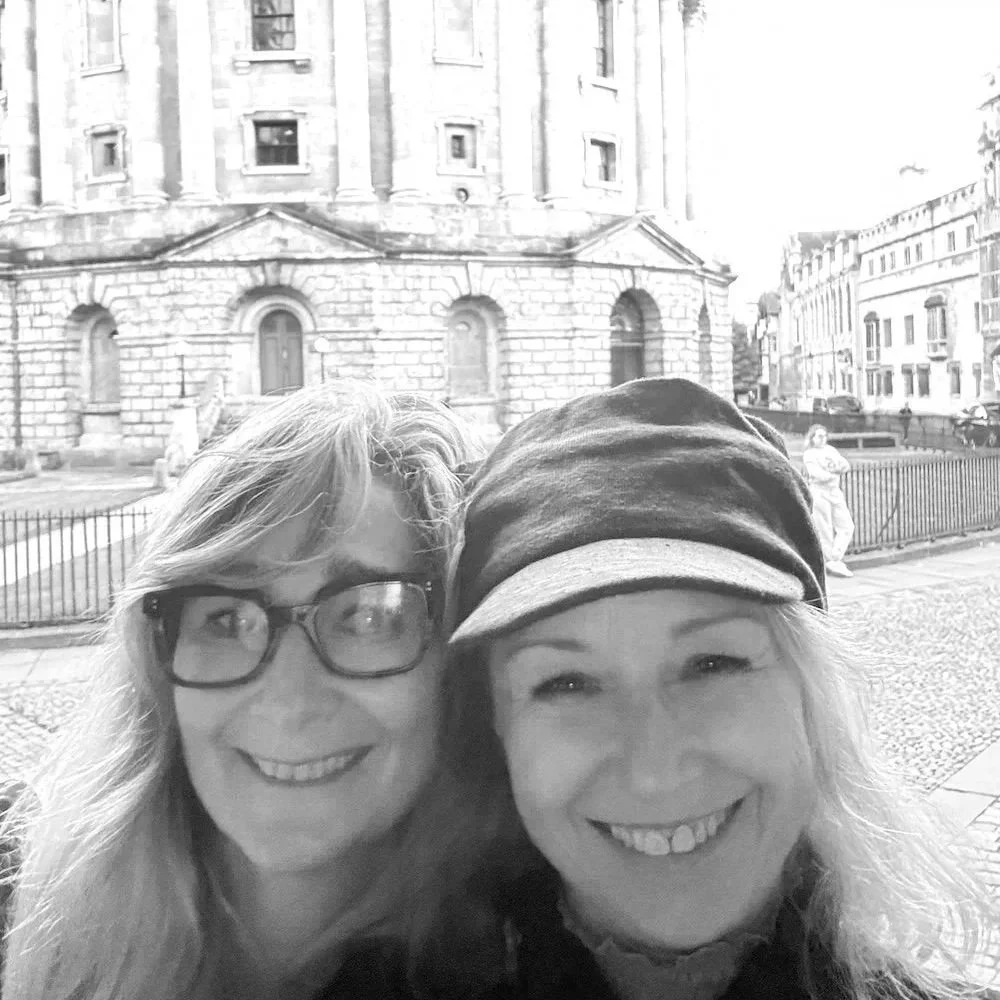
In September last year, I had the privilege of attending Transform Trauma Oxford 2025: Healing Our Relational World described as the world’s biggest trauma, mental health and wellbeing conference, and held in the city of Oxford. It’s not often that I get to attend a training of this calibre without travelling abroad, so having it here felt like a real gift.
To gather with thousands of practitioners, researchers, therapists, educators, and healers, all committed to understanding trauma and supporting healing was profoundly moving. The scale of the event was impressive, yes. But what stayed with me most was something quieter: the shared recognition that healing is deeply relational.
At the heart of the conference was a simple but powerful truth: we are wired for connection. And yet, so much of trauma is about disconnection.
As Bessel van der Kolk reminded us, “Our brain is wired for connection but trauma is re-wiring it for protection.”
That sentence alone could have carried the entire weekend.
Protection Makes Sense
One of the recurring themes across talks and panels was this: people do not behave the way they do because of who they are, but because of what they have been through.
When we view behaviour through that lens, everything shifts. A child who withdraws, a partner who becomes defensive, or a client who dissociates.
These are not character flaws. They are adaptations. Intelligent, creative strategies developed in the absence of safety.
One definition of trauma shared during the conference described it as an overwhelming experience in childhood that happens without support. Not just the event itself, but the aloneness within it. The nervous system overloaded, with no co-regulation available in the child’s environment.
And that word kept returning throughout the weekend: support.
Isolation contributes to suffering. We are not meant to metabolise overwhelming experiences alone. When connection is missing, protection takes over.
Relational Trauma: The Wounds We Don’t Always See
There was deep exploration of relational trauma, particularly the kind of trauma that hides in plain sight.
Emotional rejection, for example, was described as one of the most common and least recognised form of traumatic experience. Not being seen. Not being mirrored. Not being understood.
In attachment terms, this subtle absence can be just as impactful as overt harm.
Listening to Dan Siegel speak about interpersonal neurobiology, I was reminded that the mind develops in relationship. The brain quite literally shapes itself through attunement. When attunement is inconsistent or absent, the nervous system adapts.
Similarly, Esther Perel spoke eloquently about modern relational dynamics, and how intimacy requires both closeness and autonomy. She highlighted how many couples are not struggling because they do not love each other, but because unhealed attachment wounds silently govern their interactions and dictate their responses to each other.
Intimacy was reframed beautifully during the conference as “into me see” - the capacity to see oneself clearly and to allow another to see us too. True intimacy begins with self-awareness. Without it, we relate from protective parts rather than present awareness.

Mary Alice Miller, Myira Khan, Mike Niconchuk, Linda Thai, Bessel van der Kolk.
Internal Worlds and the Parts That Protect
A particularly powerful session was led by Richard Schwartz, founder of Internal Family Systems (IFS).
IFS offers a compassionate framework: we all have parts. Some carry pain. Others protect us from that pain. None are inherently bad.
What moved me most was the consistent emphasis that even our most extreme behaviours are attempts to protect the system. When we approach ourselves, and our clients, with curiosity rather than judgement, something softens.
The work is not to absorb the energy of the patient, but to observe it. That distinction feels especially important for practitioners. Compassion does not require self-sacrifice. Boundaries are part of relational safety.
Embodiment and the Wisdom of the Body
Trauma is not just cognitive, it is physiological. It lives in the tissues, the breath, the posture, the autonomic nervous system.
This was embodied beautifully in sessions by Licia Sky, whose somatic and movement-based practices invited us out of theory and into sensation. Through gentle embodiment exercises, she demonstrated that safety is not an abstract idea, it is a felt experience.
Similarly, Janina Fisher offered profound insights into structural dissociation and the way trauma fragments experience in romantic relationships. Her integration of neuroscience and compassion-based approaches was both grounding and hopeful.
Ruby Wax brought mindfulness into the room with her characteristic honesty and humour. Her sessions reminded me of that awareness, even of our racing thoughts, creates space. And space allows choice.
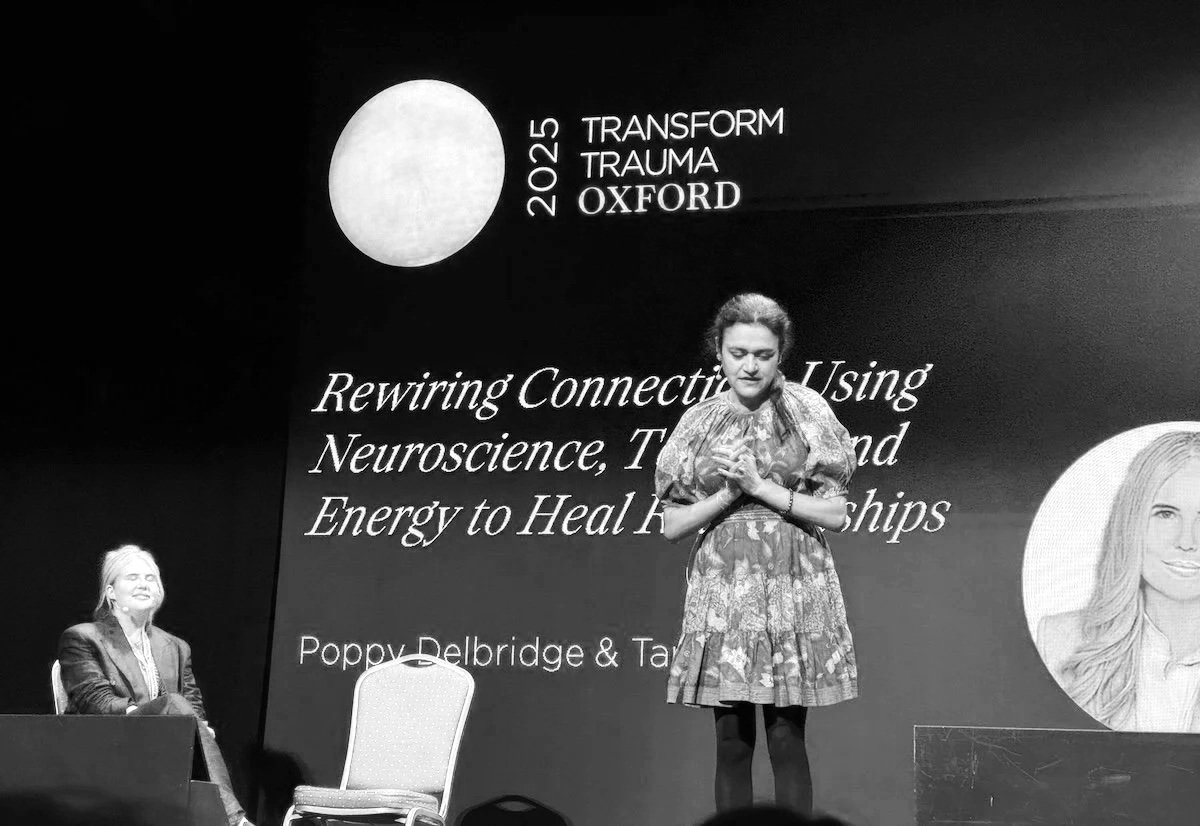
We were also introduced to tapping techniques by Poppy Delbridge, who demonstrated how rhythmic bilateral stimulation can help regulate stress responses. Watching a room full of clinicians tapping along together felt like a collective exhale. It was a palpable taste of that relational field in which healing can happen.
Belonging Versus Fitting In
One of the most resonant discussions centred on belonging.
Fitting in is not belonging. Fitting in often requires self-abandonment. Belonging means showing up as we are, and being respected, valued, and honoured for the authenticity that we bring with us.
In trauma recovery, this distinction matters deeply. Many individuals learn early that parts of themselves are unacceptable. They adapt by editing, shrinking, or performing.
But healing requires something braver: authenticity in safe relationship.
That authenticity is not about being our “best.” In fact, as one speaker poignantly put it: you don’t need to be your best, you need to be your healthiest. Being your best often comes at a cost.
Health, on the other hand, includes rest, healthy boundaries, ability to regulate, and self-compassion.
Psychedelics and the Future of Trauma Treatment
A particularly compelling panel explored current research into psychedelic-assisted therapy for trauma healing.
On stage were Bessel van der Kolk, David Nutt, Lauren Macdonald, and Chantelle Thomas.
The discussion was nuanced and evidence-based. Rather than positioning psychedelics as a miracle cure, the panel emphasised preparation, integration, and therapeutic containment. The research suggests that, in carefully controlled settings, certain compounds may help soften rigid protective patterns and reopen relational capacity.
What struck me most was that even here, in conversations about cutting-edge neuroscience, the central theme remained relationship. It is not the substance alone that heals. It is the safe relational field within which experiences are processed that expands our capacity for being more than our coping strategies created in response to trauma and lack of safety.
Seeing Trauma Through a Wider Lens
Throughout the conference, there was increasing acknowledgment that trauma is not only individual but systemic. Cultural trauma. Intergenerational trauma. Societal disconnection.
When isolation contributes to suffering, healing must include reconnection, to self, to others, and to community.
The atmosphere at Transform Trauma Oxford reflected that. Between sessions, strangers shared reflections openly. There was a sense of collective learning rather than hierarchy. Researchers sat alongside bodyworkers. Psychiatrists alongside yoga therapists. Coaches alongside social workers.
It felt, in many ways, like a living demonstration of relational repair.
What I Am Bringing Back to My Practice
Attending Transform Trauma Oxford 2025 has deepened my commitment to trauma-informed, body-based work.
It reaffirmed that:
Safety is the foundation of healing
Protection strategies deserve respect
The nervous system changes in relationship
Embodiment is essential
Belonging heals shame
It also reinforced something I hold close in my own studio: the work is gentle. The work is collaborative. And healing unfolds at the pace of safety.
We cannot rush the nervous system. But we can create the conditions in which it no longer needs to brace.
Poppy Delbridge and Tara Swart
A Final Reflection
If I had to distil the conference into one message, it would be this:
We heal in connection.
Whether through Internal Family Systems, somatic embodiment, mindfulness, relational therapy, tapping, emerging psychedelic research, or my own deep experience with Neuro-Affective Relational Model (NARM), the thread is the same.
Trauma may rewire us for protection. But safe, respectful relationship can help rewire us for connection again.
And perhaps that is what ‘Healing Our Relational World' truly means, not just repairing individuals, but cultivating environments where people are seen, supported, and valued as they are.
Because belonging is not about performing wellness. It is about being met in our humanity.
And that, more than anything, is what I carried home from this beautiful collective experience in the center of Oxford.
Recommended lectures and workshops to watch online (free trial with full access available): https://mastersevents.com/common-threads/
Power, Freedom, and Belonging: Collective Healing in a Fragmented World, moderated by Mary Alice Miller with Linda Thai, Myira Khan, Mike Niconchuk, Bessel van der Kolk, Jack Saul
Bless Your Body With Your Voice: Put Your Members Into Song with Bea Palya
Rewiring Connection: Using Neuroscience, Tapping and Energy to Heal Relationships
with Poppy Delbridge, Tara Swart
When Intimacy Feels Unsafe: Healing the Legacy of Traumatic Attachment with Janina Fisher, Frank Anderson
Healing Our Relational World: Trauma, the Body and Relational Healing with Bessel van der Kolk, Licia Sky
Psychedelics and the Healing of Relationships: Exploring Connection, Trauma and Transformation by Bessel van der Kok, David Nutt, Lauren Macdonald, Chantelle Thomas.